Pet Gear, Decoded
Paws Lab sizes dog and cat gear by published spec, not by veterinary advice: dog length plus inches for crates, and 1.5x body length for litter boxes. The site covers equipment for dogs and cats — crates, carriers, harnesses, fountains, litter systems, and GPS trackers — sized and compared by the specs that decide whether gear actually fits and works: dog length + inches for crate sizing, 1.5x body length for litter boxes, GPS+cellular vs Bluetooth-range for trackers, and IATA's own container rules for air travel. We don't give veterinary, health, or nutrition advice, and we never recommend diets or treatments — for any health question about your pet, ask your vet.
Most "best pet gear" lists sell the brand name. We start from the measurement: a crate sized to your dog's actual length (not the breed-average guess), a harness fitted by girth and fit-point mechanics, a litter box sized to your cat's own body — not a generic "large." Start with our named dataset below, or jump straight to a question.
The Pet Gear Numbers
Our named dataset — crate sizing, IATA crate rules, harness fit-points, fountain specs, litter box math, tracker types, all in one normalized table.
9 tables →
Crates & Carriers
Size by dog length and weight class, plus airline carrier compliance basics.
2 guides →
Harnesses
Y-front vs step-in vs no-pull front-clip — fit-point mechanics and honest tradeoffs.
1 guide →
GPS & Bluetooth Trackers
The subscription-vs-range distinction that decides which type you actually need.
2 guides →
Litter Systems
The 1.5x body-length sizing rule, and enclosed-vs-open honesty.
2 guides →
Water Fountains
Pump wattage, reservoir volume, filter intervals, and noise class.
1 guide →
Start here — the first four things a new owner actually buys
These are the picks we'd hand someone bringing an animal home this week: a crate that grows with the dog, a litter box sized for a kitten rather than a full-grown cat, a carrier that meets airline crate rules, and the one other item most people end up ordering twice because they sized it wrong the first time. Each links to a live Amazon search, not a fixed listing.
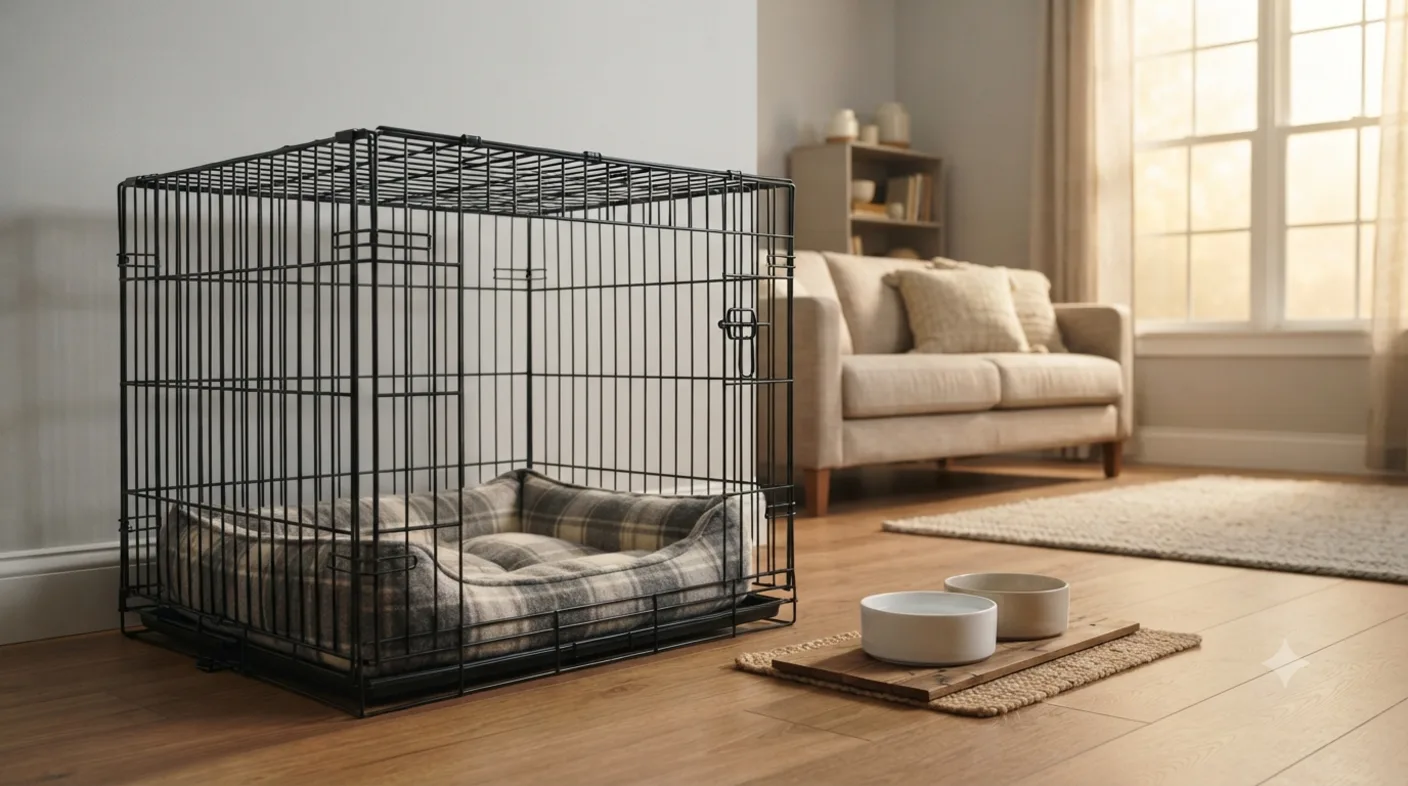
Crate Wire Crate with Divider Panel
Buy adult-projected size (measured length + 2-4in, height + 2-4in); use the divider panel to shrink the space while your puppy is small
A divider panel means you buy one crate for the dog's whole life instead of upgrading three times.
Best for: Any puppy owner who wants to crate-train without repurchasing gear every few months
Watch out: An adult-size crate with no divider gives a puppy room to potty in one corner and sleep in the other — the divider is not optional, it's the point.
Check price on AmazonNot deciding today? Add it to your cart over there — Amazon keeps it saved (and flags any price change) until you're ready.
Litter Box Small Open-Pan Litter Box (Kitten-Height Sides)
Low-side entry sized to kitten leg reach; plan to upgrade to 1.5x-body-length box by ~6 months
Low sides let a small kitten climb in without help, something a tall adult-height box makes difficult.
Best for: Kittens under about 6 months old
Watch out: A kitten litter box is a temporary size — as the kitten grows, the box needs to grow with it under the 1.5x body-length rule, or litter-box avoidance becomes likely.
Check price on AmazonNot deciding today? Add it to your cart over there — Amazon keeps it saved (and flags any price change) until you're ready.
Crate IATA-Compliant Hard-Sided Crate
Ventilated on all four sides (upper two-thirds), leak-proof base, metal door hardware, sized with room to stand/turn/lie down
A crate meeting IATA container construction basics is accepted by more airlines' cargo programs than a soft-sided or under-ventilated crate.
Best for: Cargo-hold or crated air travel
Watch out: IATA rules are the baseline — always confirm your specific airline's current requirements and book directly with them before travel; requirements vary by carrier and route.
Check price on AmazonNot deciding today? Add it to your cart over there — Amazon keeps it saved (and flags any price change) until you're ready.
Harness Step-In or Y-Front Harness (Adjustable)
Multi-point adjustable straps sized by current chest/neck girth, not projected adult size
Adjustable straps let you re-size every few weeks as a puppy grows, instead of buying a new harness monthly.
Best for: Puppies still growing into their adult frame
Watch out: Puppies outgrow fixed-size harnesses fast — re-measure chest girth monthly and re-adjust; a loose harness is a slip-out risk.
Check price on AmazonNot deciding today? Add it to your cart over there — Amazon keeps it saved (and flags any price change) until you're ready.
The claims worth decoding first
How we work
We're a research-based site: we analyze manufacturer specifications, published industry standards (like IATA's Live Animals Regulations for crate construction), and sizing methods from veterinary-behavior organizations — rather than physically testing every product. We explain tradeoffs plainly, always name a downside, and stay on equipment specs and sizing — never health or nutrition claims. Read our full methodology →